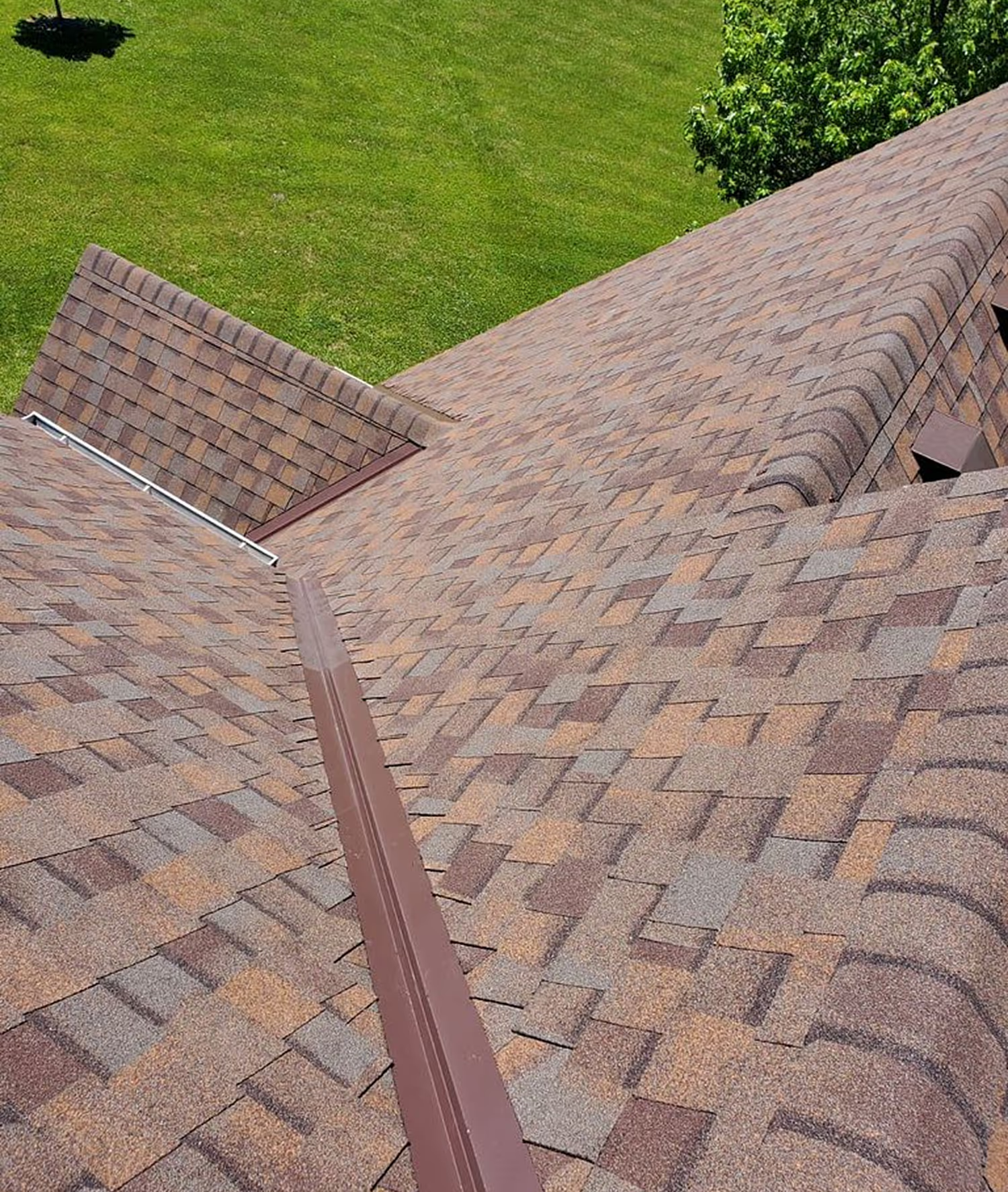
What Causes Granular Loss on Roof Shingles?

If you've noticed dark, gritty material collecting in your gutters or downspouts, that's granular loss — the mineral granules embedded in the surface of asphalt shingles shedding off over time. It happens on every asphalt roof eventually, but the rate, pattern, and cause tell you very different things about your roof's condition.
Here's a breakdown of what actually causes granular loss on shingles and what each pattern means.
What Granules Do
Asphalt shingles are manufactured with a layer of mineral granules — typically crushed stone or slate — pressed into the surface of the asphalt mat. They do three jobs: protect the asphalt from UV degradation, add fire resistance, and give shingles their color and texture.
Without granules, the asphalt beneath is directly exposed to sunlight. UV radiation breaks down asphalt relatively quickly — within a few years of sustained exposure, unprotected asphalt becomes brittle, cracks, and fails to shed water reliably. Granules are the primary reason a shingle lasts 25 to 30 years instead of five.
When granules shed faster than expected, the clock on the shingle's useful life accelerates accordingly.
Normal Granule Shedding vs. Accelerated Loss
Some granule loss is built into the lifecycle of asphalt shingles. New shingles shed loosely bonded granules in the first year — this is normal and not a concern. Moderate shedding continues across the life of the roof as weathering gradually loosens the granule-to-asphalt bond.
What's not normal: concentrated bare patches on the shingle surface, gutters filling heavily with granules on a roof that isn't new, or roof shingles shedding granules at a rate that's visibly accelerating from one inspection to the next. Those patterns point to specific causes worth identifying.
The Main Causes
- Age and weathering. The most common driver. As asphalt shingles age, the asphalt mat hardens and contracts through years of thermal cycling — expanding in heat, contracting in cold. That movement gradually loosens the granule bond. Granular loss on an aging roof is normal and expected; the rate of loss accelerates as shingles approach end of life. On a roof that's 20-plus years old, heavy granule accumulation in gutters is often a reliable signal that replacement is approaching.
- Hail impact. Hail is the single most damaging acute cause of granular loss on shingles. Each impact displaces granules from a concentrated area, leaving a mat depression and an exposed asphalt spot. Hail-damaged granule loss has a distinct pattern — random distribution across the roof surface, roughly consistent with the size of hailstones, with each impact spot showing a small circular or irregular bare patch. If you're seeing this pattern after a storm, a professional inspection is warranted — hail damage is typically an insurable loss.
- Foot traffic. Walking on asphalt shingles scuffs granules off the surface. A few service visits — HVAC technicians, satellite dish installers, chimney sweeps — can leave visible granule loss trails across the roof if the workers aren't experienced with proper foot placement. This is localized, follows a path, and is cosmetic rather than structural unless the traffic is repeated and heavy.
- Blistering. When shingle blisters rupture, they leave a bare patch of exposed asphalt surrounded by displaced granules. Granule loss from blistering tends to cluster in the areas of highest heat exposure — south and west-facing slopes — and is often accompanied by the raised blister profile before the dome breaks open. Ventilation failure is the most common driver of blistering-related granule loss on roofs that aren't new.
- Manufacturing defects. Granules that were inadequately bonded during manufacturing will shed early and heavily, typically in the first few years of the roof's life. If a relatively new roof is losing granules at a rate inconsistent with its age, a manufacturing defect claim through the shingle warranty may be applicable. This requires documentation and a professional assessment.
- Thermal cycling and freeze-thaw stress. In climates with significant temperature swings — Kansas City qualifies on both ends — the repeated expansion and contraction of shingles stresses the granule bond over time. This is a gradual contributor that compounds with age rather than a standalone cause, but it's part of why roofs in harsher climates often reach end of life earlier than the rated lifespan.

How to Spot It
Granule loss shows up in several places:
- Gutters and downspouts — granules accumulate at the bottom of downspouts and in gutter troughs. Running your hand along the inside of a gutter after rain will tell you quickly how much shedding is occurring.
- Bare patches on shingle surfaces — visible from the ground on lower-pitched roofs, or with binoculars. Areas of exposed dark asphalt surrounded by intact granule coverage.
- Discoloration patterns — as granules shed unevenly, shingles take on a mottled, blotchy appearance. This is distinct from algae discoloration, which streaks in the direction of water flow.
- Concentrated spots after storms — circular impact patterns distributed randomly across the roof surface following hail.
What the Pattern Tells You
The location and distribution of roof granular loss is diagnostic:
- Uniform, distributed loss across the whole roof. Age-related. The roof is cycling through its natural lifespan. Monitor the rate of progression.
- Concentrated on south or west slopes only. Heat-driven — blistering or accelerated UV weathering from highest sun exposure. Ventilation may be a contributing factor.
- Random circular spots distributed across the surface. Hail impact. Get a professional inspection and document for insurance purposes.
- Linear path across the roof. Foot traffic damage. Cosmetic in most cases.
- Heavy loss on a newer roof. Manufacturing defect. Contact the installer and review warranty documentation.
The Bottom Line
Granular loss is the most readable diagnostic signal an asphalt roof gives you. Light shedding on a newer roof is normal. Heavy or concentrated granule loss on a roof with any significant age on it — or following a storm — warrants a closer look. If you're seeing bare patches or heavy granule accumulation in your gutters, a professional roof repair assessment will tell you whether you're looking at normal aging, storm damage, or a system that's approaching the end of its service life.
Related News & Articles
Stay informed with expert insights, practical tips, and real stories to protect your property and plan smarter improvements every season.




Don’t Miss The Next Property Tips & Advice
Fresh guidance on roofing and property care, delivered straight to your inbox. Stay informed, stay ahead, and keep your investment protected.