What Is GAF Deck Armor? Roof Deck Protection Explained
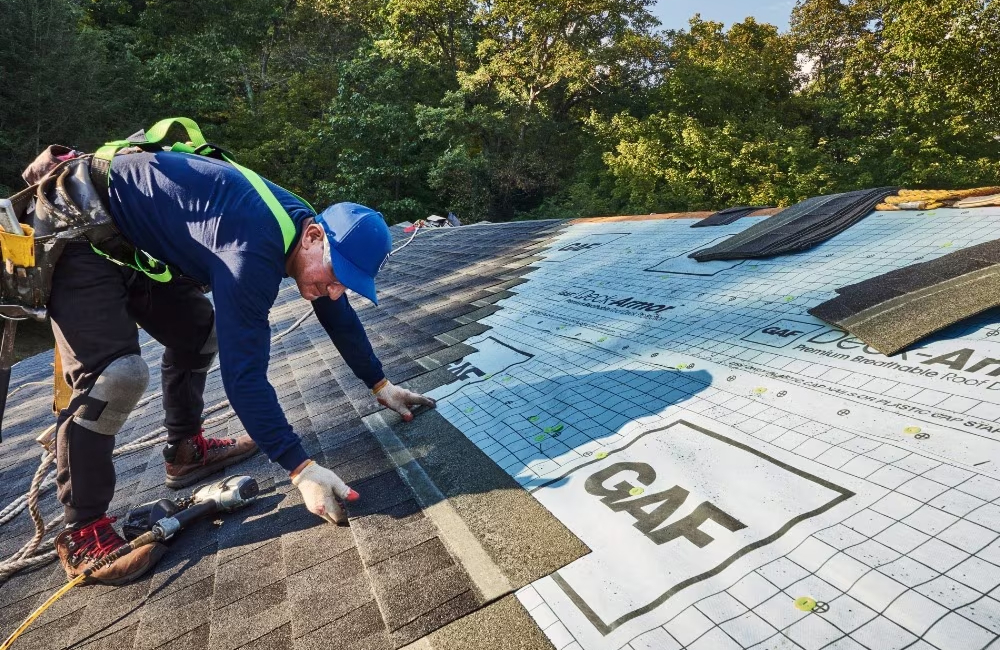
When a roofing contractor talks about underlayment, they're referring to the layer of material that goes down on the roof deck before shingles are installed. It's not something most homeowners ever see — it gets covered up during installation — but it's one of the more consequential components in the roofing system.
GAF Deck Armor is one of the leading synthetic underlayment products on the market, and it's the roof deck protection standard used in high-quality installations. Understanding what it does and why it's specified is useful if you're evaluating a roofing estimate or trying to understand what you're actually getting in a replacement.
What Underlayment Does
Roof underlayment sits between the roof deck — the plywood or OSB sheathing nailed to the rafters — and the finished roofing material on top. Its job is to provide a secondary barrier against water intrusion if moisture gets past the shingles.
This matters more than it might seem. Shingles are the primary weather barrier, but they're not perfect. Wind-driven rain can work under shingle edges. Ice dams can force water back up under the eave. A nail miss during installation can leave a small gap. Underlayment is the system's backup — the line of defense that keeps water from reaching the deck if the shingles fail to stop it.
It also protects the roof deck during installation itself. From the time the old roofing comes off to the time the new shingles go down, the deck is exposed. A quality synthetic underlayment goes down first and keeps the deck dry if weather moves in mid-job.
What Makes GAF Deck Armor Different
The traditional alternative to synthetic underlayment is felt paper — the black tar paper that's been used in roofing for decades. Felt paper works, but it has real limitations. It tears easily, absorbs water when wet, and becomes slippery underfoot, which creates safety issues for crews working on the roof.
GAF Deck Armor is a synthetic underlayment — meaning it's manufactured from polymer materials rather than asphalt-saturated felt. The key differences in practice:
- Tear resistance. Deck Armor is significantly stronger than felt paper. It holds up to foot traffic during installation and doesn't tear when stapled, walked on, or exposed to wind before shingles go on.
- Water resistance. Unlike felt, GAF Deck Armor doesn't absorb moisture when wet. It repels water rather than saturating, which keeps the deck protected even if rain arrives mid-installation.
- Breathability. This is the technical differentiator most homeowners don't know to ask about. GAF Deck Armor is designed as a breathable synthetic underlayment, meaning it allows moisture vapor that builds up in the attic to pass through rather than trapping it against the deck. Trapped moisture accelerates rot and shortens deck life. A breathable underlayment addresses that failure mode directly.
- Slip resistance. The surface is engineered to give crew members traction while walking the roof during installation. On a steep pitch in warm weather, this isn't a minor detail.
- UV resistance. GAF Deck Armor can be left exposed for up to 180 days without degrading. That's relevant on jobs where shingle installation is delayed — storm damage situations, supply delays, or phased projects.
Where It Fits in the GAF Roofing System
GAF markets its products as a layered roofing system, and Deck Armor is positioned as the roof deck protection layer within that system. It's distinct from other GAF underlayment products in the lineup:
- GAF Felt Buster. A synthetic underlayment in the same category as Deck Armor but without the breathability feature. Lower price point, solid performance.
- GAF Tiger Paw. Another synthetic option with good tear resistance and UV exposure ratings. Tiger Paw underlayment is positioned at a similar tier to Deck Armor in performance.
- GAF WeatherWatch and StormGuard. These are leak barrier products — a different category than standard underlayment. They go in high-risk areas: eaves, valleys, around penetrations. Not the same product or purpose as Deck Armor.
Deck Armor is specified for the field of the roof — the main body of the deck — where standard underlayment is required. Leak barriers go in the vulnerable zones. A complete GAF installation typically uses both, along with ridge ventilation and starter strips, to build out a system with manufacturer-backed warranties.
GAF Deck Armor Installation
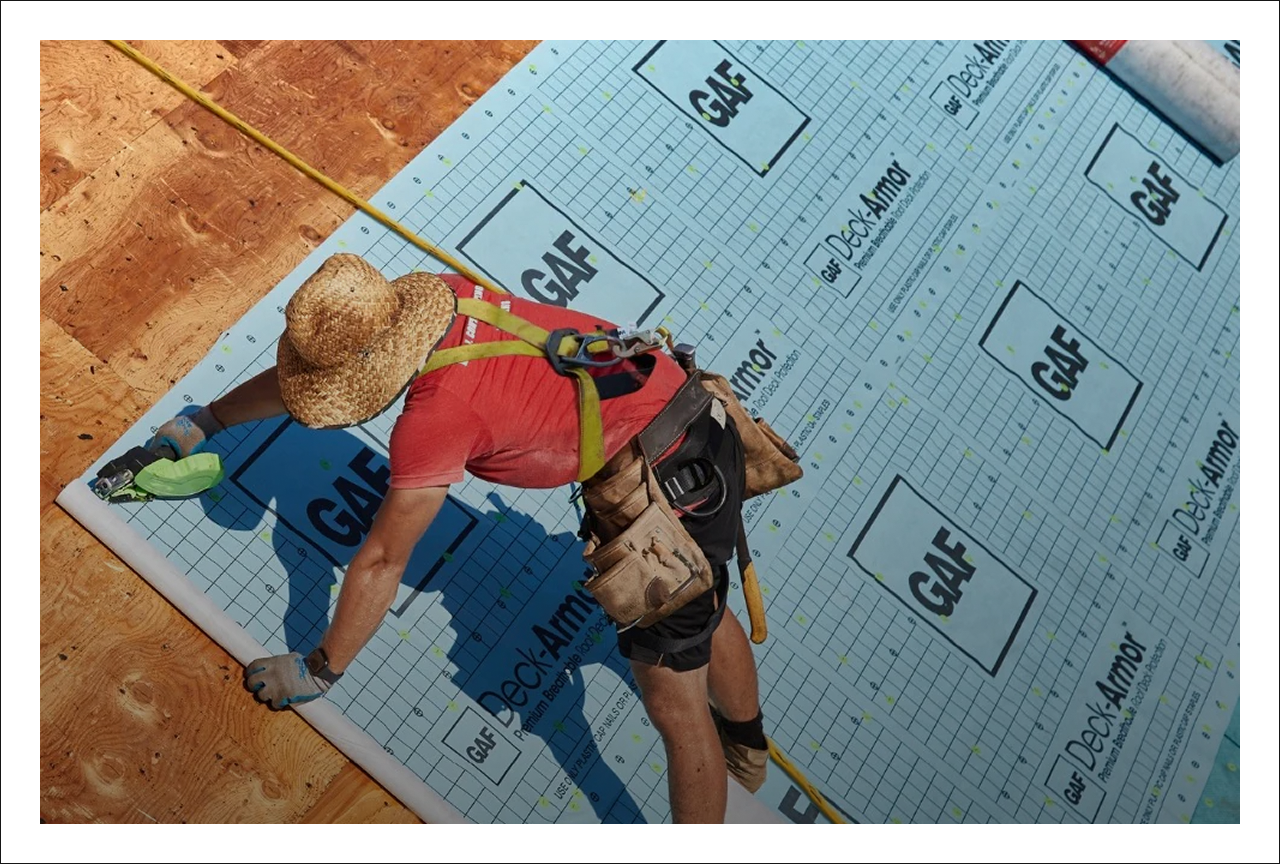
GAF Deck Armor installation follows standard synthetic underlayment procedures with some specifics to the product. It's installed horizontally across the deck, starting at the eave and working toward the ridge, with overlapping courses to maintain the water-shedding direction. Seams are overlapped per manufacturer specs — typically four to six inches on horizontal laps, six inches on vertical laps.
One of the practical advantages during GAF Deck Armor installation is that the material lays flat and stays in position without buckling, which speeds up the process and produces a cleaner substrate for shingle installation. Felt paper in hot weather can wrinkle and buckle, creating an uneven surface that affects how shingles lay.
When installed as part of a full GAF system by a certified contractor, Deck Armor contributes to eligibility for GAF's enhanced warranty coverage — including the Golden Pledge warranty, which covers both materials and workmanship.
Energy Efficiency and Deck Armor
The breathability factor has a direct connection to energy performance. Roofs that trap moisture vapor against the deck create conditions for rot, but they also contribute to heat and moisture buildup in the attic space. An energy efficient roof underlayment like Deck Armor that allows vapor to move through the assembly works with attic ventilation rather than against it.
The result isn't dramatic in terms of energy bills — underlayment is one component in a larger system — but it's part of why ventilation and underlayment choices are connected. A breathable underlayment paired with proper ridge and soffit ventilation gives the roof assembly the moisture management it needs to perform over its full lifespan.
Is It Worth Specifying?
Compared to standard felt paper, the cost premium for synthetic underlayment is modest relative to the total cost of a roof replacement. The performance advantages — tear resistance, breathability, UV exposure rating, slip resistance — are real and documented. For a roof that's meant to last 25 to 30 years, the underlayment is a long-term component of the system, not a temporary layer.
The honest answer is that most homeowners getting a quality roof replacement will have synthetic underlayment specified already. The question worth asking a contractor is which synthetic product they use and why. GAF Deck Armor is a well-regarded answer. A contractor who can explain the breathability distinction and how it integrates with the warranty structure is demonstrating product knowledge worth paying attention to.
The Bottom Line
GAF Deck Armor is a synthetic roof deck protection product that outperforms traditional felt underlayment on tear resistance, water repellency, breathability, and UV exposure. It's a standard component of high-quality GAF roofing installations and contributes to both long-term deck health and warranty eligibility. If you're evaluating a roof replacement and want to understand exactly what's going into your roof system, Easton Roofing can walk you through the full material specification.
Related News & Articles
Stay informed with expert insights, practical tips, and real stories to protect your property and plan smarter improvements every season.




Don’t Miss The Next Property Tips & Advice
Fresh guidance on roofing and property care, delivered straight to your inbox. Stay informed, stay ahead, and keep your investment protected.