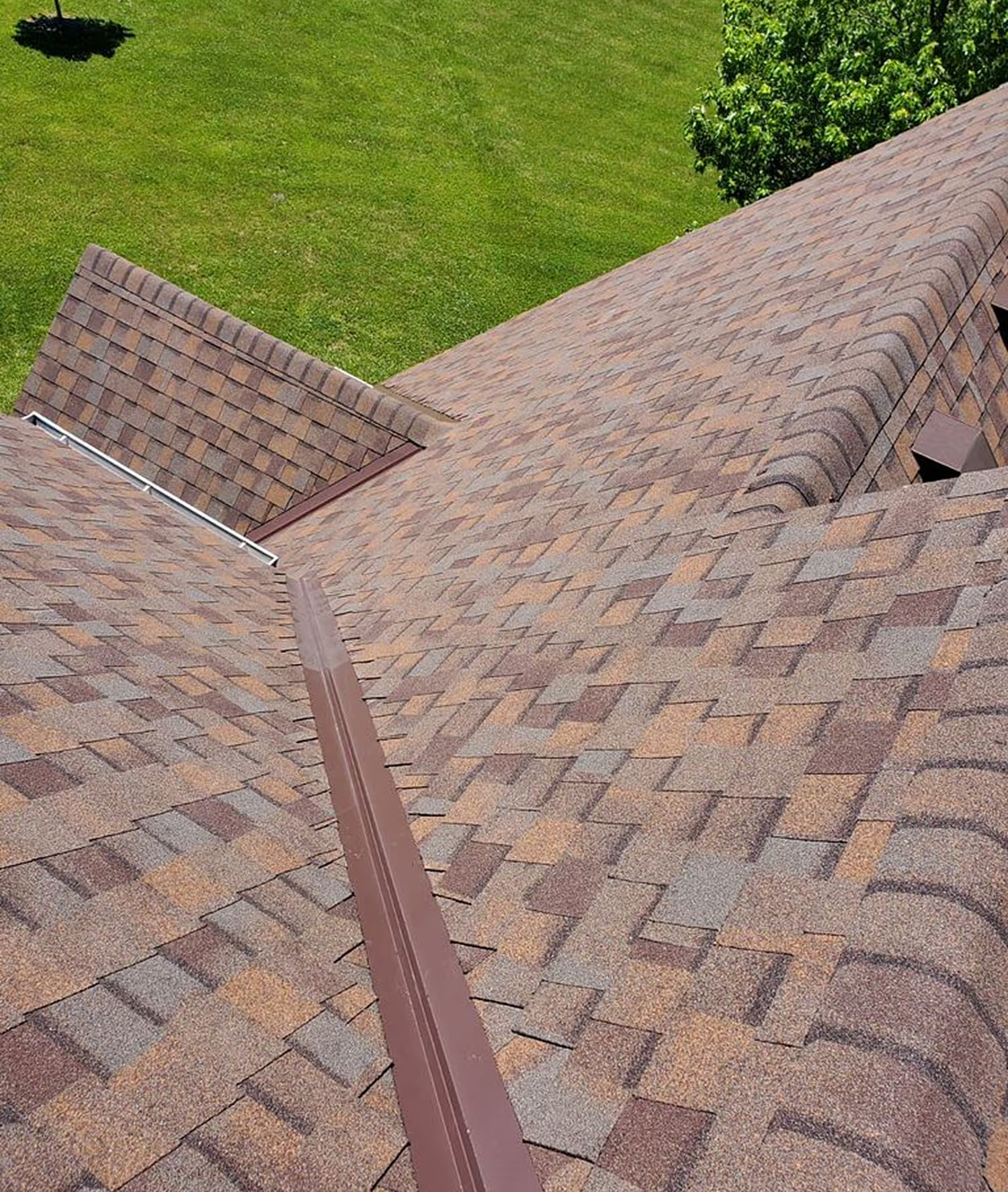
Does a New Roof Lower Your Home Insurance?

Does a New Roof Lower Your Home Insurance?
If you're weighing the cost of a roof replacement, you've probably wondered whether a new roof could lower what you pay for homeowner's insurance. It's a fair question, and the short answer is: it often does — but not automatically, and not always by the same amount.
Here's what actually affects that number and what you can realistically expect.

Why Insurers Pay Attention to Your Roof
Your roof is the first line of defense against the weather events most likely to generate a claim — wind, hail, rain, and ice. Insurance companies know this. A roof in poor condition increases the likelihood of a covered loss, which means more risk for them and potentially higher premiums for you.
When you replace an old or damaged roof, you're removing a significant risk factor from their calculation. That can translate directly into savings on your annual premium.
What Actually Affects How Much You Save
Several factors influence whether — and how much — your premium drops after a new roof:
- The age of your previous roof. Insurers often apply surcharges or coverage limitations to roofs over 15 to 20 years old. Replacing an aging roof removes those penalties. The older the roof you're replacing, the more noticeable the difference in your premium.
- The material you choose. Impact-resistant shingles — typically rated Class 3 or Class 4 — can qualify for a specific discount with many insurers. These shingles are designed to hold up better in hail, which is a common claim driver in the Kansas City area. Metal roofing can also improve your rate in some cases. Standard asphalt shingles may still lower your premium simply by being new, but the material upgrade matters too.
- Your specific insurance carrier. Every insurer prices roof age and condition differently. Some offer structured discounts for Class 4 shingles. Others simply adjust their risk rating based on overall roof condition. It's worth calling your agent directly after a replacement to ask what documentation they need and what the impact on your rate will be.
- How your insurer values the roof. Policies can be written on an actual cash value basis or a replacement cost basis. Actual cash value factors in depreciation — meaning an older roof is worth less on paper even if it's structurally intact. A new roof changes that equation and may shift how your coverage is structured.
How Much Can You Realistically Expect to Save?
There's no universal number. Some homeowners see modest reductions of 5 to 10 percent on the dwelling portion of their policy. Others — particularly those who replace a very old roof with impact-resistant material — report more significant savings. A few insurers in hail-prone markets like Kansas City offer discounts specifically tied to Class 4 shingle certification.
The honest answer is that your insurer is the only one who can tell you the exact impact for your specific policy. What a roofing contractor can tell you is what material options are available, which ones carry impact-resistance ratings, and what documentation your insurer will typically want.
How to Make the Most of Your New Roof
A few straightforward steps can help ensure your new roof translates into the insurance benefit you're entitled to:
- Ask about impact-resistant options before you commit to a material. If your insurer offers a discount for Class 3 or Class 4 shingles, it's worth factoring that ongoing savings into the overall cost comparison.
- Get a certificate or documentation from your contractor. Insurers typically want confirmation of the installation date, the materials used, and the shingle rating. A professional contractor should be able to provide this without issue.
- Notify your insurance company promptly. Don't wait for your renewal. Contact your agent as soon as the work is complete and ask them to update your policy. Some rate changes take effect immediately; others adjust at renewal. Either way, the sooner you report it, the sooner you see the benefit.
- Shop around if your current insurer doesn't adjust. Not every insurer prices roof condition the same way. If your current carrier doesn't reflect the improvement in your rate, it may be worth getting a few competing quotes. A new roof is a meaningful underwriting factor and other insurers may recognize it.
What a New Roof Won't Do on Its Own
A new roof doesn't guarantee lower premiums in every case. If other factors are driving your rate — your claims history, the overall age of the home, or broader market changes in your area — a roof replacement may not move the needle as much as expected. It also won't automatically trigger a discount without you actively reporting the change to your insurer.
Think of it this way: a new roof eliminates one of the bigger risk factors your insurer is watching. That's worth something on its own, independent of what it does to your monthly bill.
The Bottom Line
A new roof can lower your homeowner's insurance premium — particularly when you replace an aging roof with quality, impact-resistant materials and notify your insurer right away. The exact savings depend on your carrier, your policy structure, and the material you choose, but the financial case extends well beyond the roof itself.
If you're considering a roof replacement and want to understand your material options — including impact-rated shingles that may qualify for insurance discounts — Easton Roofing can walk you through what's available for your home.
Related News & Articles
Stay informed with expert insights, practical tips, and real stories to protect your property and plan smarter improvements every season.



Don’t Miss The Next Property Tips & Advice
Fresh guidance on roofing and property care, delivered straight to your inbox. Stay informed, stay ahead, and keep your investment protected.