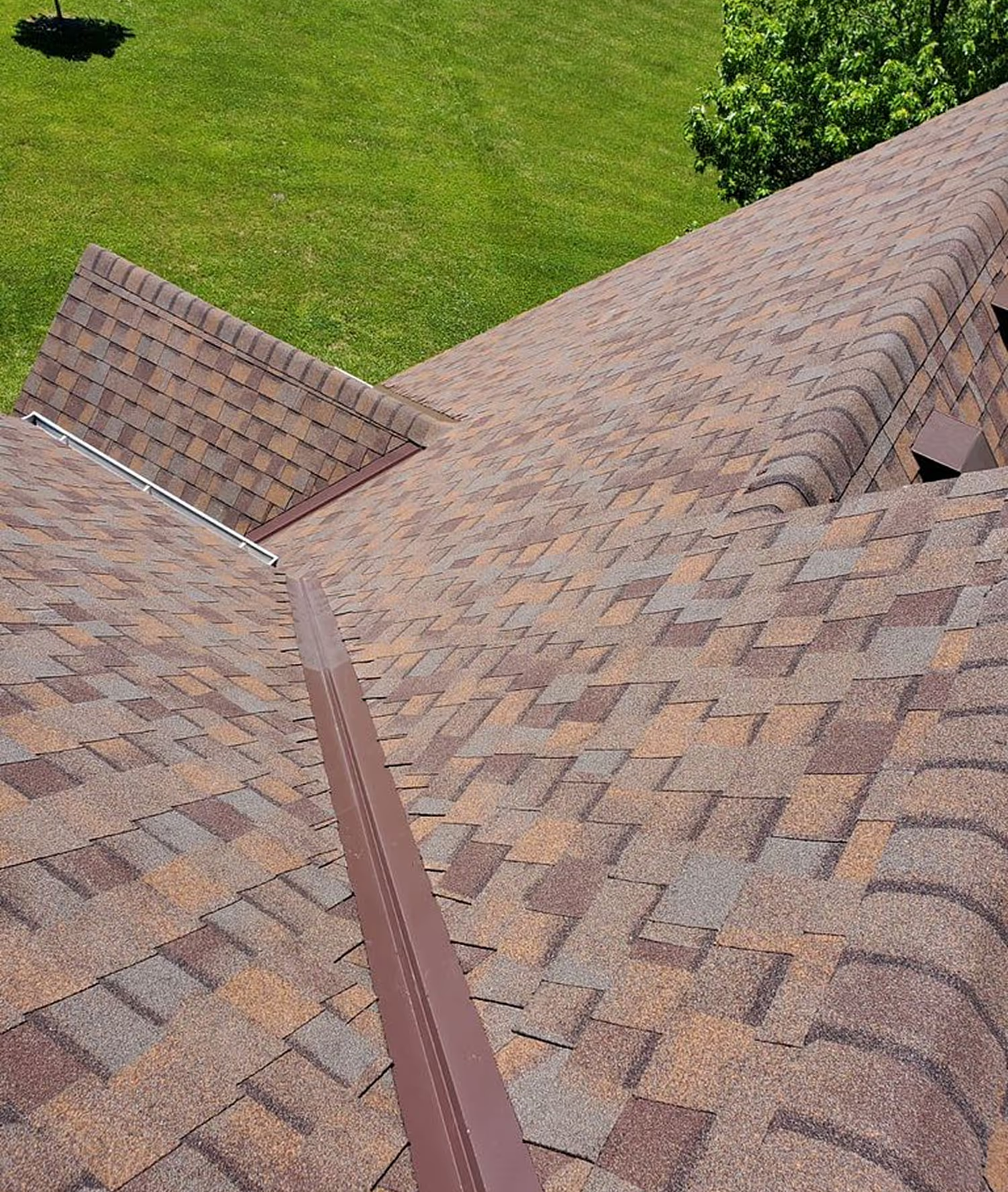
The 3 R's of Commercial Roofing: Repair, Restore, Replace
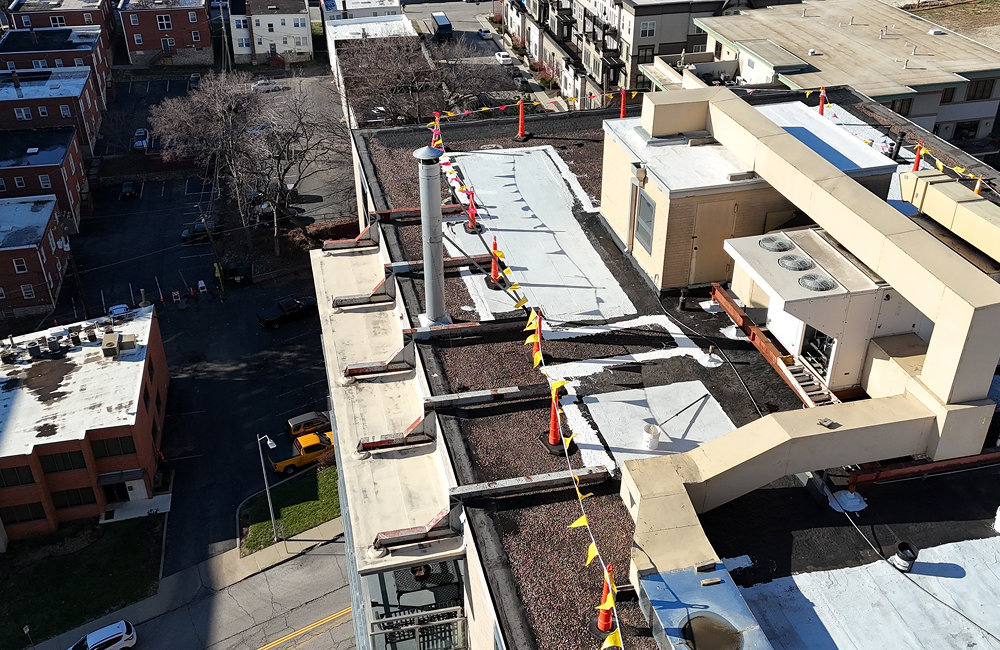
When something goes wrong with a commercial roof — or when it's simply aging out — the decision in front of a property manager or business owner isn't just "who do I call." It's a more fundamental question: what does this roof actually need?
The three Rs of commercial roofing give that decision a clear framework. Repair, restore, and replace are the three paths available for any commercial roof system, and choosing the right one depends on the current condition of the roof, the scope of the problem, and the long-term economics of each option.
Here's how each path works and how to think through which one applies to your situation.
Repair: Addressing Specific, Contained Problems
Repair is the right call when a commercial roof has isolated issues — a failed seam, a puncture in the membrane, flashing that has pulled away from a penetration, or localized storm damage. The roof system as a whole is still performing; the problem is confined to a specific area.
Commercial roof repairs are typically the lowest cost option in the short term and the fastest to execute. A qualified contractor can assess the damage, isolate the affected area, and restore watertight performance without touching the rest of the roof.
The key qualifier is "isolated." If the same roof requires repeated repairs year over year — if you're patching the same sections, dealing with recurring leaks, or finding new problem areas each time a crew goes up — that pattern is a signal that the underlying system is failing, not just the specific spots being patched. At that point the economics of continued repair start working against you.
A scheduled commercial roof inspection can help draw that line clearly. Regular inspections create documentation of roof condition over time, which makes the repair vs. restore vs. replace decision data-driven rather than reactive.
Restore: Extending the Life of a Functional System
Commercial roof restoration sits between repair and full replacement. It's the right option when a roof has reached the point where isolated repairs are no longer sufficient — but the underlying structure and decking are still sound enough that full tear-off isn't necessary.
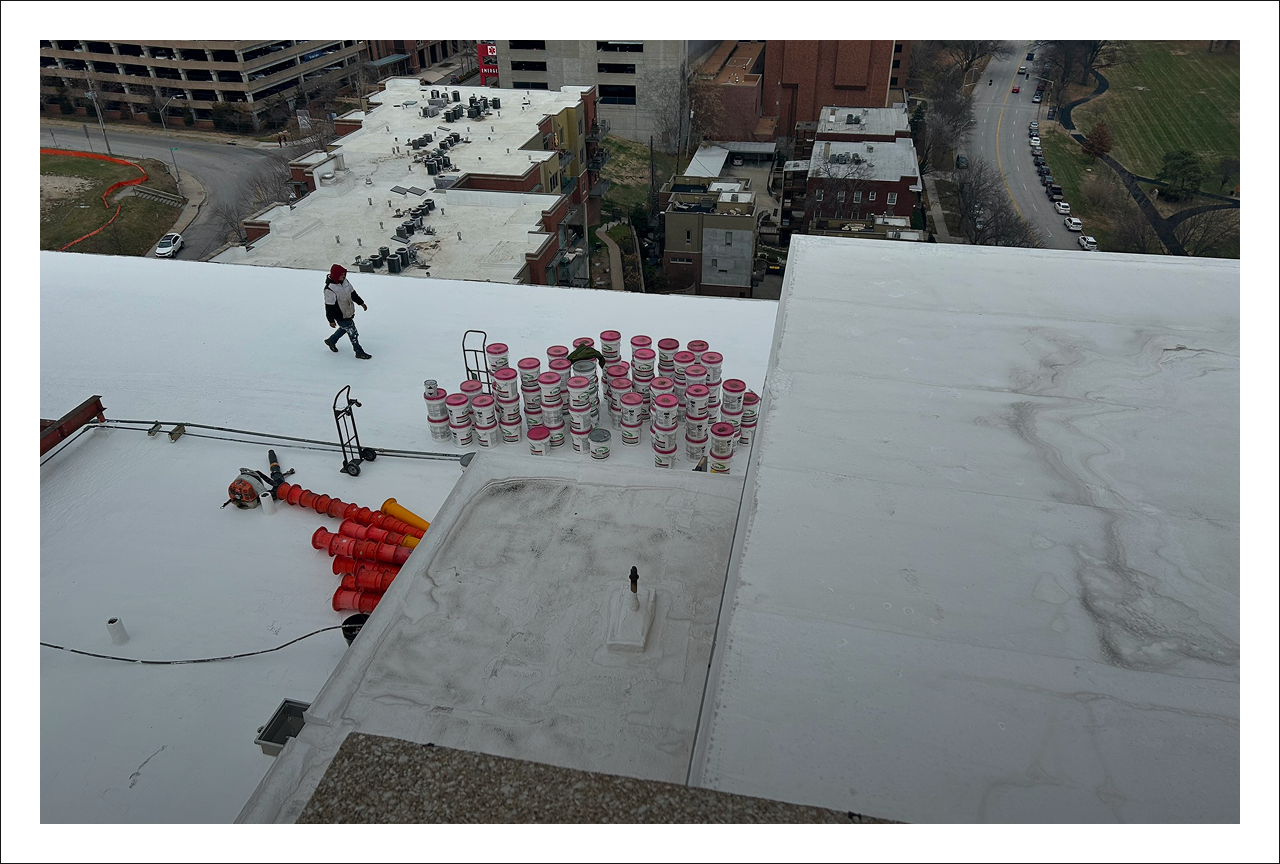
Restoration typically involves cleaning the existing roof surface, addressing any remaining problem areas, and applying a commercial-grade coating system over the top. Silicone, acrylic, and polyurethane coatings are common choices depending on roof type and climate exposure. The result is a restored, seamless surface that extends the functional life of the existing system — often by 10 to 20 years depending on the coating and the care taken in application.
Commercial roof restoration is generally less disruptive and less expensive than full replacement. There's no tear-off, no disposal of old materials, and significantly less downtime for the building and its occupants. For a large flat roof on an occupied commercial property, that difference in disruption is real money.
Restoration also has a financial angle worth knowing. Depending on how it's classified and documented, commercial roof restoration work may qualify for more favorable tax treatment than a full replacement — which is a capital improvement subject to depreciation. A tax professional familiar with commercial real estate can clarify the specifics, but it's a question worth asking before you commit to a full replacement if restoration is a legitimate option.
The candidate profile for restoration: a roof that is 10 to 20 years old, has been maintained with reasonable regularity, has no significant structural damage, and has a substrate that is dry and intact. Roofing maintenance for aging roofs — catching problems early and keeping the surface clean and properly drained — is what keeps a commercial roof in the restoration-eligible category rather than forcing a full replacement ahead of schedule.
Replace: When the System Has Reached End of Life
Full commercial roof replacement is the right call when the roof system can no longer be cost-effectively repaired or restored. The indicators are typically cumulative: widespread membrane failure, saturated insulation, structural decking damage, or a roof that has simply exceeded its design lifespan and no longer responds to surface-level treatment.
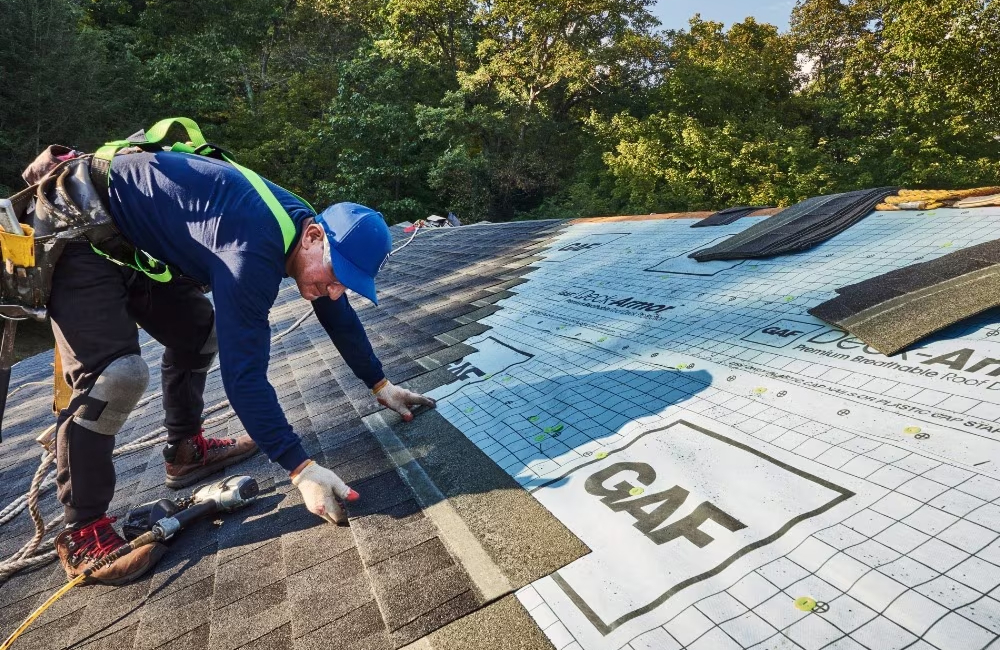
A full replacement involves tear-off of the existing system down to the deck, inspection and repair of the decking as needed, and installation of a new roof system. For flat commercial roofs, the most common systems are TPO (thermoplastic polyolefin), EPDM (ethylene propylene diene monomer), and PVC membranes — each with different performance characteristics, cost profiles, and longevity expectations.
Replacement carries the highest upfront cost of the three options but also resets the clock entirely. A properly installed commercial roof replacement comes with manufacturer warranties on materials and workmanship warranties from the contractor — typically 10 to 30 years depending on system and warranty tier selected.
From a tax standpoint, a full roof replacement on a commercial property is treated as a capital improvement and depreciated over 39 years for commercial real estate under current IRS rules. This is distinct from the treatment of repairs and some restoration work, which may be deductible in the year they're completed. Again, a CPA is the right resource for the specifics, but the distinction between the three Rs has real implications beyond just the construction cost.
How to Tell Which One You Need
In practice, the right answer usually comes from a professional assessment rather than a visual inspection from the ground. A scheduled commercial roof inspection by a qualified contractor will document current conditions, identify problem areas, estimate remaining useful life, and give you the information to make the repair, restore, or replace decision with confidence.
A few practical signals for each path:
- Repair: One or two isolated problem areas, roof is less than 15 years old, no history of recurring leaks in multiple locations, decking and insulation are dry.
- Restore: Roof is 10 to 20 years old, surface is showing wear but substrate is intact, repairs have become more frequent, full tear-off isn't warranted yet.
- Replace: Roof is at or beyond expected lifespan, widespread membrane failure or saturation, repairs are no longer holding, structural issues present.
The worst outcome is deferring the decision until a small repair problem becomes a restoration problem, or a restoration candidate becomes a mandatory replacement. Scheduled inspections — typically twice a year for commercial properties, spring and fall — are what prevent that pattern.
The Bottom Line
Repair, restore, and replace aren't just three different price points — they're three different strategic decisions with different cost, disruption, and long-term value implications. If your commercial roof is due for an assessment or you're trying to figure out which path makes sense, working with an experienced commercial roofing contractor who can document current conditions and walk you through the options is the right first step.
Related News & Articles
Stay informed with expert insights, practical tips, and real stories to protect your property and plan smarter improvements every season.



Don’t Miss The Next Property Tips & Advice
Fresh guidance on roofing and property care, delivered straight to your inbox. Stay informed, stay ahead, and keep your investment protected.