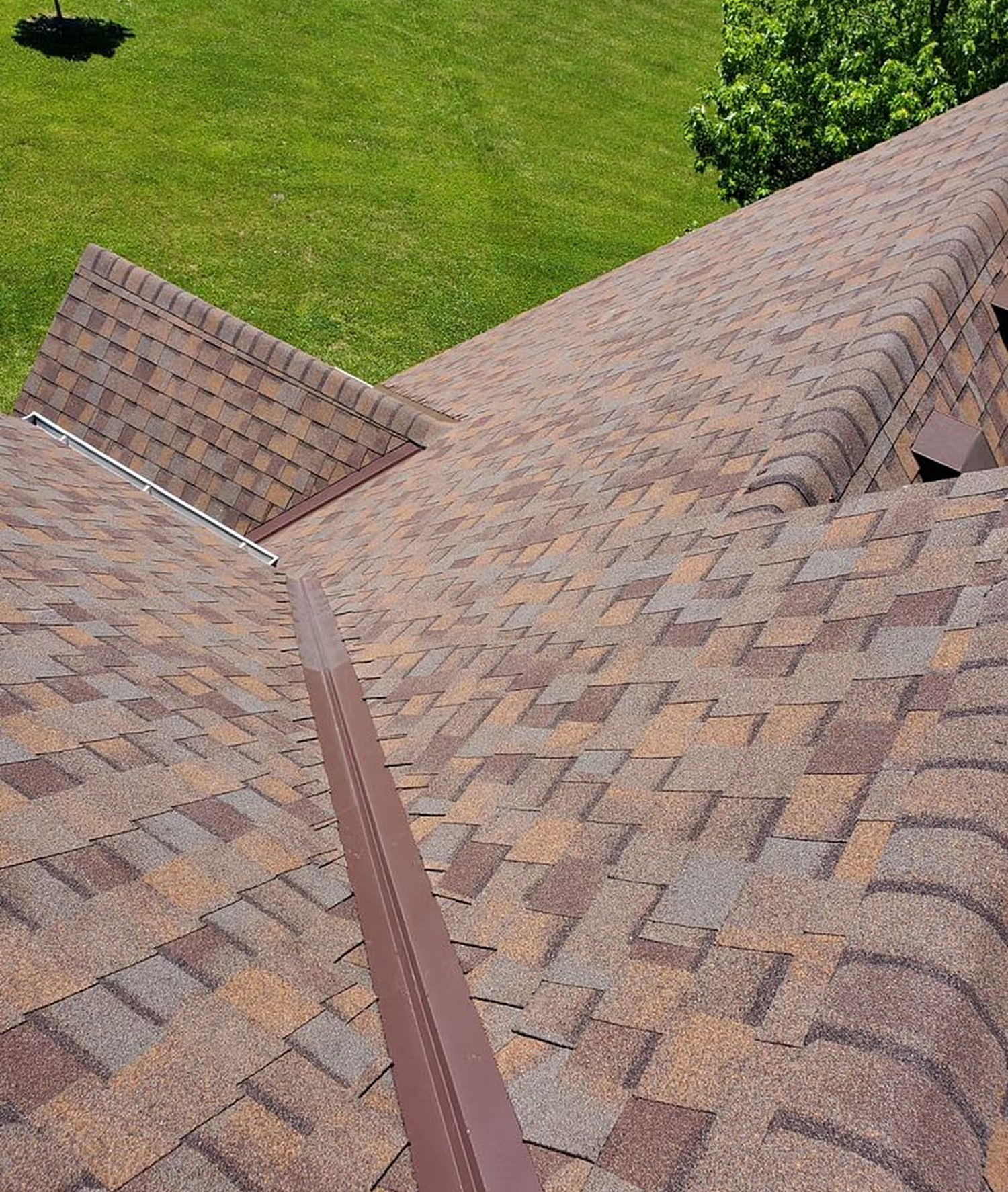
Is Roof Replacement Tax Deductible?

If you're planning a roof replacement and wondering whether you can write any of it off on your taxes, you're not alone. It's a common question — and the answer depends on how you use your home.
The short version: for most homeowners, a roof replacement on a primary residence is not directly tax deductible. But there are situations where you can recover some of the cost through deductions or credits, and it's worth understanding the distinction.

Why Most Home Improvements Aren't Deductible
The IRS generally treats a roof replacement as a capital improvement — an upgrade that adds value to your property over time. Unlike a mortgage interest payment or property tax, capital improvements on a personal residence don't create a tax deduction in the year you pay for them.
What a capital improvement does do is increase your home's cost basis. That matters if you sell your home and realize a profit. A higher basis reduces the taxable gain — but for most homeowners, especially those who qualify for the primary residence exclusion (up to $250,000 for single filers, $500,000 for married), this only becomes relevant in specific situations.
In other words: a new roof may help you down the road, but it doesn't put money back in your pocket at tax time the way a deductible expense does.
The Exception: Rental Properties
If the roof is on a rental property, the rules change significantly. The IRS allows landlords to deduct the cost of maintaining and improving rental properties as business expenses — but how you deduct it depends on how the work is classified.
Repairs (restoring something to its original working condition) are generally deducted in full in the year they're completed. Improvements (which extend the useful life of the property or add value) must be depreciated over time. For residential rental property, the IRS uses a 27.5-year depreciation schedule.
A full roof replacement on a rental is typically treated as an improvement and depreciated rather than deducted all at once. However, there are provisions under IRS rules — including the safe harbor for small taxpayers and the tangible property regulations — that may allow landlords to deduct certain roofing work more immediately, depending on cost and property value thresholds.
If you own rental property, this is an area where a tax professional earns their fee. The classification of roof work can have real dollar implications.
Home Office Deduction
If you work from home and take the home office deduction, you may be able to deduct a portion of your roof replacement cost — specifically the percentage of your home that the office represents.
For example, if your home office is 10% of your home's square footage and you qualify for the home office deduction under IRS rules, you could potentially deduct 10% of the roof replacement cost as a business expense. The remaining 90% would still be treated as a capital improvement.
The home office deduction has strict eligibility requirements. The space must be used regularly and exclusively for business. If you're an employee rather than self-employed, the rules are even more limiting following the 2017 Tax Cuts and Jobs Act. This is another area where confirming your eligibility with a tax professional before claiming the deduction is the right move.
Energy Efficiency Tax Credits
There's one more angle worth knowing: federal tax credits for energy-efficient home improvements.
The Inflation Reduction Act expanded the Energy Efficient Home Improvement Credit (Form 5695), which allows homeowners to claim a credit of up to 30% on qualifying upgrades. As of recent guidance, roofing materials themselves are not a standalone qualifying category — but if your roof replacement includes eligible insulation work or if your project improves the home's overall energy efficiency in qualifying ways, there may be adjacent credits available.
The credit landscape changes from year to year, and eligibility depends on specific product certifications and installation requirements. The Department of Energy and IRS.gov maintain current guidance. If your roof replacement involves meaningful energy efficiency upgrades, it's worth reviewing what's currently in effect.
What to Do Before You File
A few practical steps regardless of your situation:
- Keep all receipts, contracts, and permits related to your roof replacement. Even if the cost isn't deductible this year, documentation supports your cost basis claim if you sell.
- If you own rental property, talk to a CPA or tax professional about how your roofing work should be classified before you file.
- If you work from home, confirm whether you qualify for the home office deduction and calculate the correct percentage before applying it.
- If energy efficiency improvements are part of your project, check IRS Form 5695 instructions or consult a tax professional to see if a credit applies.
The Bottom Line
Tax rules around home improvement are more nuanced than they first appear, and roof replacement sits in a gray area for many homeowners. If you're getting ready to start a roof replacement project and want to understand your full picture — including what to document and how to think about long-term value — Easton Roofing is a resource worth reaching out to.
Related News & Articles
Stay informed with expert insights, practical tips, and real stories to protect your property and plan smarter improvements every season.



Don’t Miss The Next Property Tips & Advice
Fresh guidance on roofing and property care, delivered straight to your inbox. Stay informed, stay ahead, and keep your investment protected.