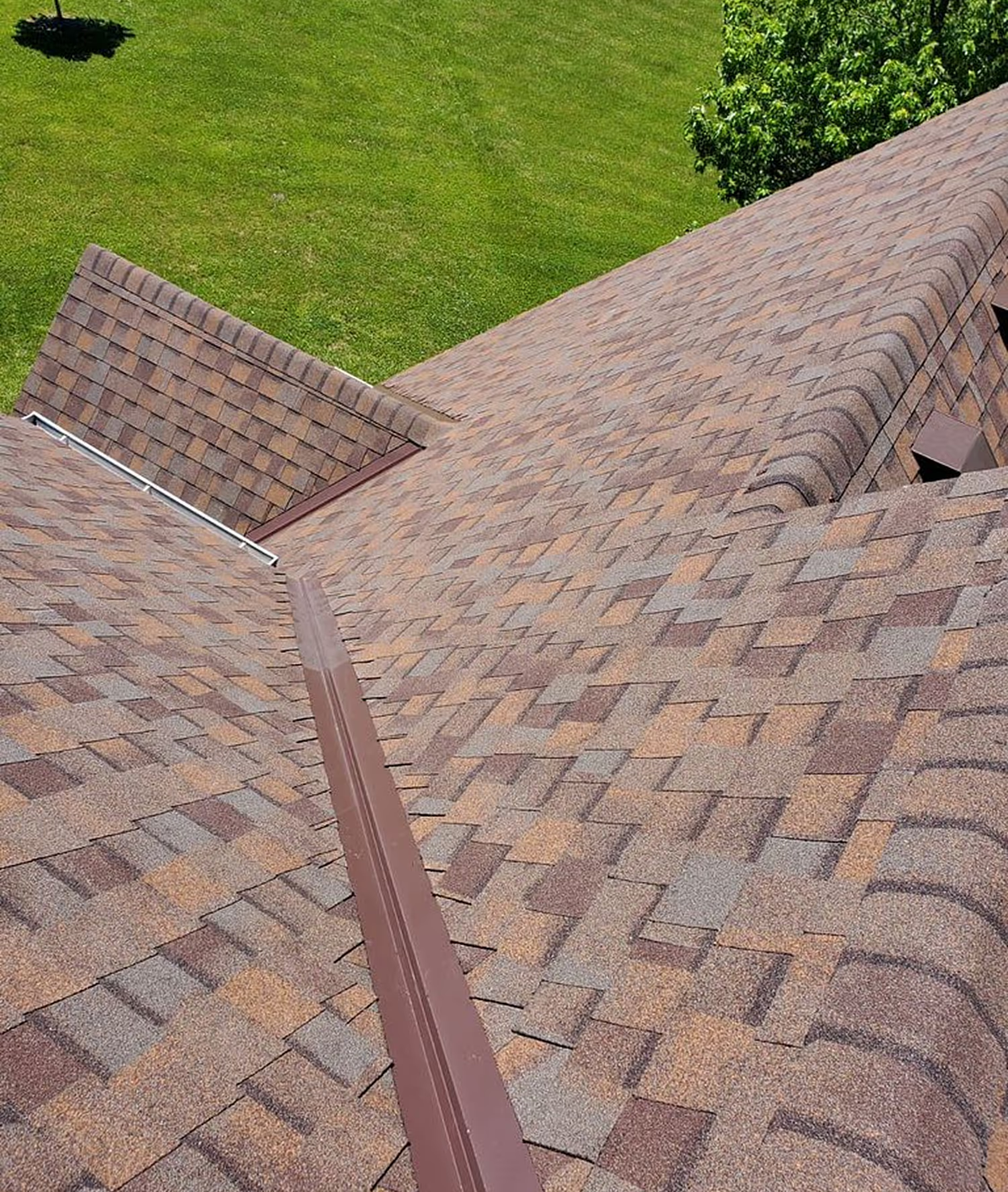
Roofing Maintenance for Aging Roofs
An aging roof behaves differently than a new one, and maintaining it requires a different approach.
A roof that's 15, 20, or 25 years old has been through hundreds of freeze-thaw cycles, years of UV exposure, and however many hail and wind events the local weather has thrown at it. The materials aren't failing — but they're operating closer to the edge of their tolerances than they were a decade ago. Small problems that would be minor on a newer roof can accelerate quickly on an older one.
The goal of roofing maintenance for aging roofs isn't to make the roof new again. It's to extend its useful life, catch the problems that can be addressed cost-effectively, and make an informed decision about replacement before a maintenance issue becomes a structural emergency.
What "Aging" Actually Means for a Roof
Most asphalt shingle roofs are designed for a 20 to 30 year lifespan depending on the shingle grade, installation quality, and how well the roof has been maintained. Architectural shingles on the higher end of the range; standard 3-tab shingles on the lower end. Metal roofs can last 40 to 70 years. Clay and concrete tile roofs can last 50 years or more with proper care.
An aging roof isn't necessarily a failing roof. But it is a roof where the margin for error has narrowed. Granule loss on asphalt shingles accelerates as shingles age, reducing their UV protection and making them more susceptible to cracking. Sealant strips that hold shingles down weaken over time. Flashing — the metal that seals transitions at chimneys, vents, and valleys — becomes more prone to failure as it cycles through temperature extremes year after year.
Recognizing that the roof is in this phase is the first step toward maintaining it correctly.
Warning Signs to Watch For on an Older Roof
Regular visual checks, even from the ground, can catch early indicators before they become larger problems. On an aging roof, look for:
- Granule loss on shingles. Asphalt shingle maintenance starts with monitoring granule loss. Gutters full of granules after rain, or bare patches visible on shingles from the ground, signal shingles that are nearing the end of their protective life.
- Curling or cupping. Shingles that curl upward at the edges or cup in the center are losing their structure. This is a material aging sign, not a damage sign, and it indicates the shingles are past their effective service life.
- Cracked or missing shingles. Shingle maintenance on an older roof means monitoring for individual shingles that have cracked, split, or blown off. Isolated failures are patchable. Widespread cracking is a system-level problem.
- Flashing failure. Rust, separation, or gaps in flashing around chimneys, skylights, vents, and valleys are one of the most common sources of leaks on aging roofs. Flashing fails before shingles in many cases.
- Moss and algae growth. Organic growth retains moisture against the roof surface and accelerates shingle deterioration. More common on north-facing slopes and in shaded areas.
- Interior signs. Water stains on ceilings or in the attic, daylight visible through the roof deck, or soft spots on the deck when walked are interior indicators that warrant immediate professional attention.
Asphalt Shingle Roof Maintenance — What It Should Include
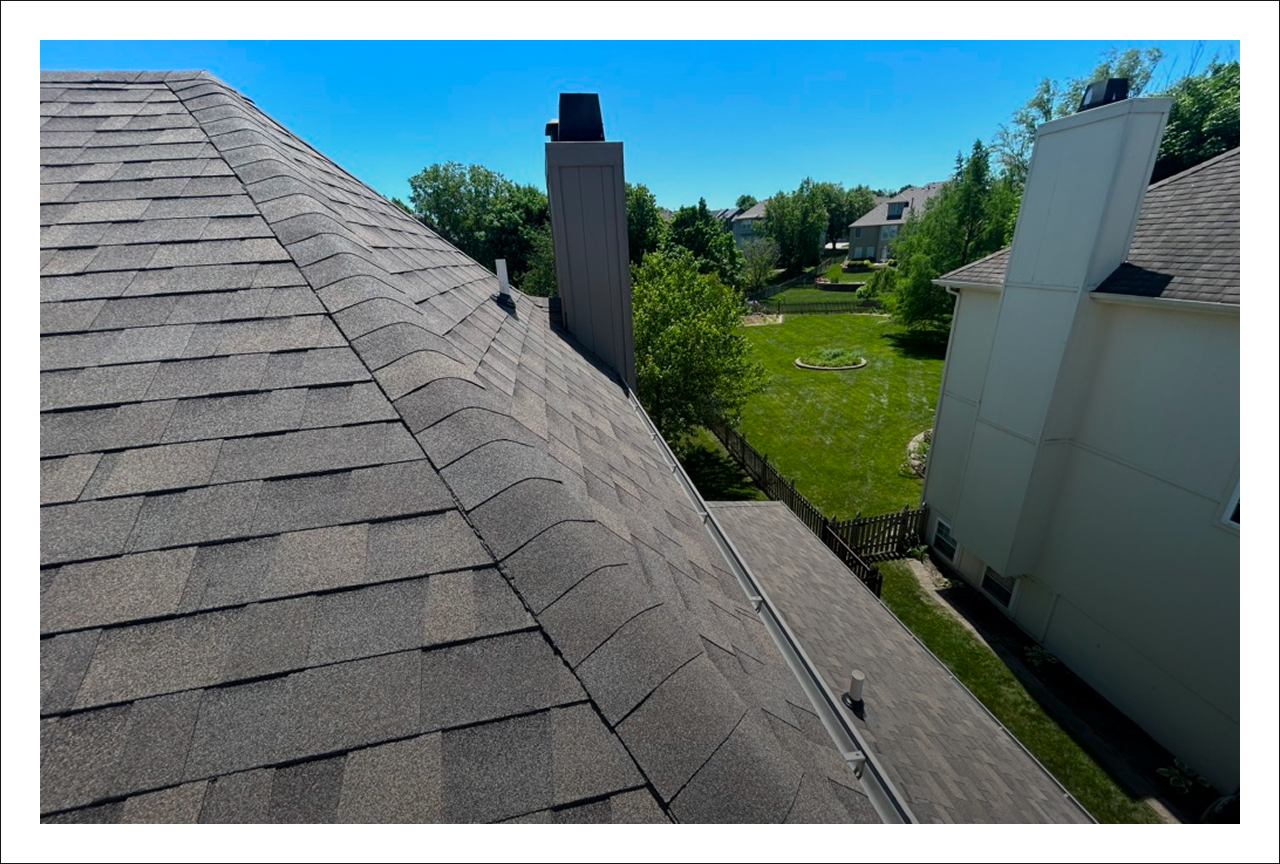
For the majority of residential roofs, asphalt shingle roof maintenance is the relevant framework. A consistent maintenance routine for an aging asphalt roof includes:
- Annual or semi-annual professional inspection — spring and fall is the standard cadence for aging roofs, compared to every few years for newer ones.
- Gutter cleaning twice a year minimum to prevent water backup at the eaves, which can cause ice damming in winter and accelerate fascia and soffit decay.
- Clearing debris — leaves, branches, and organic matter that accumulate in valleys and around penetrations trap moisture and accelerate wear.
- Treatment for moss or algae if present — zinc or copper strips at the ridge line are a preventive measure; zinc sulfate treatments address active growth.
- Flashing inspection and resealing as needed — this is the most commonly deferred maintenance item and one of the most consequential on an older roof.
- Attic ventilation check — poor attic ventilation traps heat and moisture that accelerates shingle aging from the underside. Ventilation problems on older homes are common and often undiagnosed.
Clay Tile and Concrete Tile Roof Maintenance
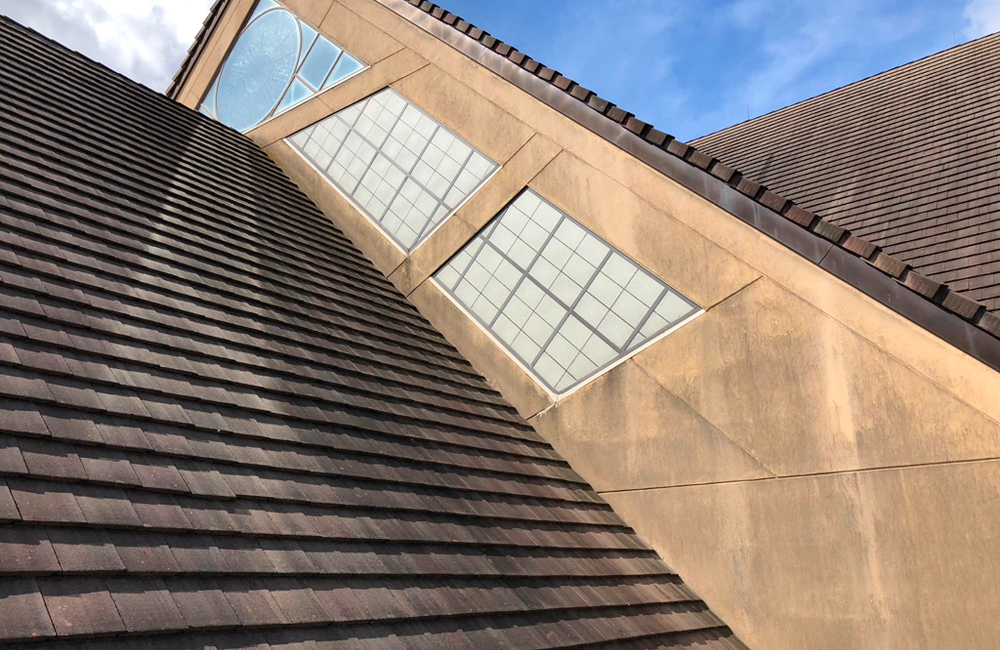
Clay tile roof maintenance follows different rules than asphalt. The tile itself is extremely durable — individual tiles on a well-maintained clay roof can last the life of the building. What fails on tile roofs is typically the underlayment beneath the tile, the mortar at ridges and hips, and the flashing at transitions.
For aging clay and concrete tile roofs, tile roofs maintenance should focus on:
- Walking inspections by a qualified contractor who knows how to move across tile without cracking it — tile surfaces are fragile under foot traffic.
- Mortar inspection at ridges, hips, and perimeter — mortar cracks and fails over time and is the most common source of water intrusion on tile roofs.
- Individual tile replacement for cracked or broken tiles — the surrounding tiles are usually fine and isolated replacement is practical.
- Underlayment condition assessment on roofs over 20 years old — underlayment failure beneath intact tile is the most significant aging issue for tile roofs and requires professional evaluation.
Commercial Roofs: The Case for Scheduled Inspections
On commercial flat roof systems, roofing maintenance for aging roofs is less about visible surface wear and more about membrane integrity, drainage performance, and penetration sealing.
Flat roofs pond water by design — they're built with slight slope to drain, but debris accumulation, settled drains, and membrane deflection can create standing water that stresses seams and accelerates failure. A scheduled commercial roof inspection twice a year — typically spring after winter freeze-thaw stress and fall before winter loads — creates the documentation needed to make proactive decisions rather than reactive ones.
For commercial property owners and facility managers, roofing maintenance plans formalize this process. A structured plan sets inspection frequency, documents roof condition over time, prioritizes repairs before they escalate, and creates a record that's valuable for insurance purposes and capital planning.
When Maintenance Stops Being Enough
The honest answer on aging roof maintenance is that it has a terminal point. Maintenance extends useful life and defers costs — it doesn't eliminate the eventual need for replacement.
The indicators that maintenance has reached its limit:
- Repairs are becoming more frequent and covering larger areas.
- The roof has reached or exceeded its design lifespan.
- Water intrusion is occurring despite active maintenance.
- The decking or structural components have been compromised.
- The cost of continued maintenance over two to three years approaches the cost of replacement.
At that point, the economically rational decision shifts from maintaining to replacing. A professional assessment can put specific numbers to that calculation and help determine whether a repair, restoration, or full replacement is the right next step.
The Bottom Line
Aging roofs don't fail all at once — they decline gradually, and that progression is manageable with the right maintenance approach. Whether it's asphalt shingle maintenance on a 20-year-old residential roof or a roof maintenance plan for a commercial property, consistent professional attention is what separates a roof that lasts its full lifespan from one that doesn't.
Related News & Articles
Stay informed with expert insights, practical tips, and real stories to protect your property and plan smarter improvements every season.



Don’t Miss The Next Property Tips & Advice
Fresh guidance on roofing and property care, delivered straight to your inbox. Stay informed, stay ahead, and keep your investment protected.